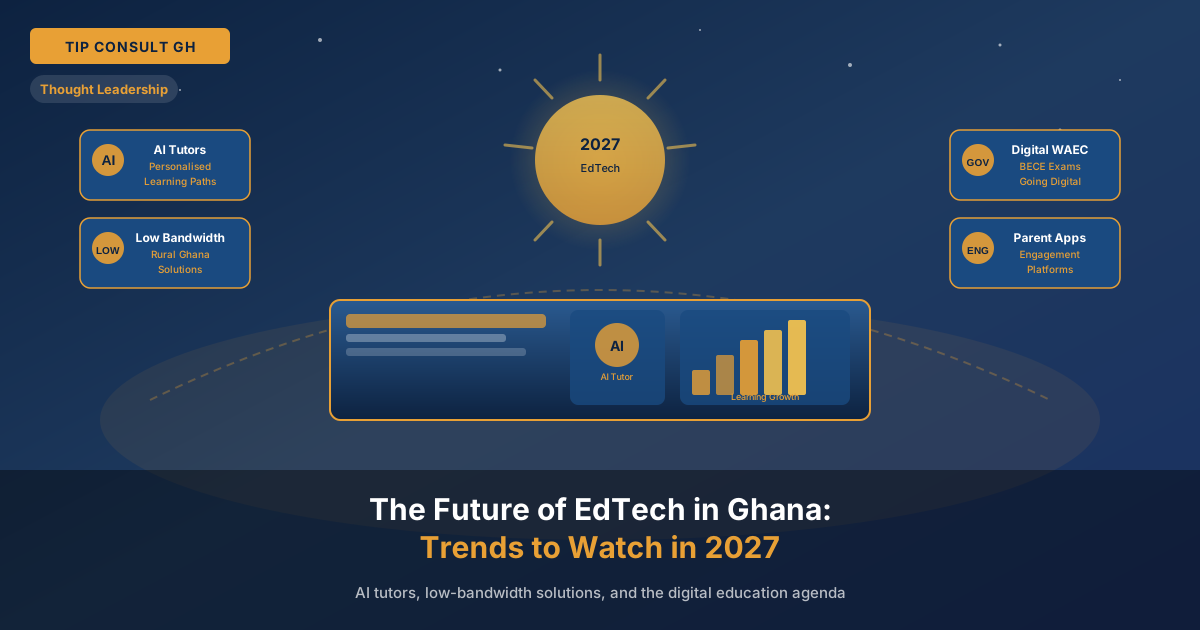
Ghana's education sector is at an inflection point. Smartphones are in more student hands than textbooks. Mobile money has made digital payments accessible from Bolgatanga to Busua. And a generation of school owners, headteachers, and education administrators are finally asking: what does technology actually do for us? Here are the five trends that will define the answer in 2027.
Trend 1: AI Tutors and Personalised Learning Paths
Globally, AI-powered tutoring is no longer experimental — it is in classrooms. Ghana will not be an exception. The driving factor is straightforward: teacher-to-student ratios in Ghanaian public schools are often 1:50 or worse. No teacher, however skilled, can give each student the individual attention they need. AI tutors can.
What does this look like in practice? A student who struggles with fractions gets more practice problems at that level, with different explanations, until they demonstrate mastery — before the system advances them. A student who masters content quickly is given extension material, not made to wait for the class to catch up.
Purpose-built African learning platforms are starting to deliver exactly this. The best of them teach in English and Twi, use images that reflect Ghanaian settings, and align with what Ghana's children are actually studying. International AI tutors built for other markets are not enough.
What schools should do now: Evaluate AI learning tools designed for the Ghanaian curriculum, not generic global products. Ask providers how their AI adapts to local language and context.
Trend 2: Low-Bandwidth Solutions for Rural Ghana
One of the most important — and least discussed — trends in EdTech is the shift toward software that works on 2G connections, low-end Android phones, and intermittent electricity. The EdTech conversation in Ghana has historically been Accra-centric. That is changing.
Providers are now building progressive web apps (PWAs) with offline-first architectures: content downloads when connectivity is available, learning continues when it isn't, and results sync when the student reconnects. Some platforms are going further — distributing learning content via SD cards and local Wi-Fi hotspots that don't require internet at all.
The schools that will benefit most from EdTech are not in Cantonments. They are in Tamale, Wa, Hohoe, and Nkoranza. Any EdTech roadmap for Ghana that doesn't include these communities is incomplete.
What schools should do now: When evaluating software, specifically test it on your worst network day, on your oldest device. If it fails those tests, it will fail your most vulnerable students.
Trend 3: Parent Engagement Platforms
The research is clear: parental involvement is one of the strongest predictors of student academic performance. Yet most Ghanaian schools still communicate with parents via term reports and open days — months apart. By the time a parent learns their child is struggling, weeks of missed intervention have already passed.
The next generation of school management systems — SchoolPak included — will make parent engagement a first-class feature, not an afterthought. This means real-time access to attendance records, grade updates, fee payment history, and direct messaging with teachers, all from a mobile app or SMS.
The SMS component is particularly important. Not all parents use smartphones. A platform that reaches parents only via an app is excluding a large segment of the parent population in Ghana. The best solutions will use a combination: app for those who have it, SMS for those who don't.
What schools should do now: Survey your parent body on their phone type and preferred communication channel. Design your parent communication strategy around reality, not assumption.
Trend 4: WAEC/BECE Digitisation
The West African Examinations Council has been incrementally digitising processes — online result checking, candidate portal registration, and e-certificates are already in place. The question being discussed now is deeper digitisation: computer-based testing (CBT) for BECE and WASSCE subjects.
Several West African countries are further along this path. Ghana is watching carefully. When the shift comes — and it will — schools that have been running their internal assessments digitally will be ready. Schools that have only ever used paper will face a steep transition.
There are real equity concerns here too. Computer-based testing requires devices and electricity. The government's role in providing infrastructure to public schools will determine whether digitisation widens or narrows educational inequality.
What schools should do now: Begin familiarising students with computer-based assessments in your internal tests. Advocate with district authorities for device access if your school lacks adequate infrastructure.
Trend 5: The Government Digital Education Agenda
Ghana's government has made digital education a stated priority. The Smart Schools initiative, national digital literacy goals, and e-learning infrastructure programmes all signal that technology integration is no longer optional — it is the direction of national education policy.
Private schools often feel distant from government policy. That is a mistake. Government-driven digitisation sets the standards that all schools will eventually be expected to meet — from digital record-keeping to reporting formats. Early adopters will influence those standards; late adopters will be forced to comply with standards set by others.
More practically: government programmes often come with funding, subsidised devices, or connectivity infrastructure. Schools that are already digitally organised are better positioned to access these resources when they become available.
"The question for Ghanaian schools is no longer whether to adopt technology. It is how to adopt it thoughtfully, in a way that genuinely serves students — not just administrators."
What schools should do now: Assign someone on your leadership team to track GES and Ministry of Education digital education announcements. Attend sector workshops. Your peers who are engaged now will help shape policy that affects you later.
What Schools Should Do Right Now
Five actions that will position your school well for the EdTech transitions ahead:
- Audit your current digital maturity. Where is your data? Paper, spreadsheets, or a proper system? You need to know your baseline before you can plan your destination.
- Start with school management first. Administrative digitisation — fees, attendance, results — builds the data foundation that learning platforms depend on. Don't skip this step.
- Evaluate tools against your connectivity reality. Test on a bad network day. Test on the cheapest phone your teachers carry.
- Invest in teacher training, not just software. The most common reason EdTech fails in schools is not the technology — it is the people. Budget for onboarding and ongoing training.
- Choose local partners where you can. A local provider understands your curriculum, speaks your language, and can support you in person. That matters when something goes wrong.
The EdTech landscape in Ghana is moving fast. The schools that engage with these trends now — thoughtfully, not reactively — will provide meaningfully better outcomes for their students in 2027 and beyond.
Talk to Us About EdTech for Your School