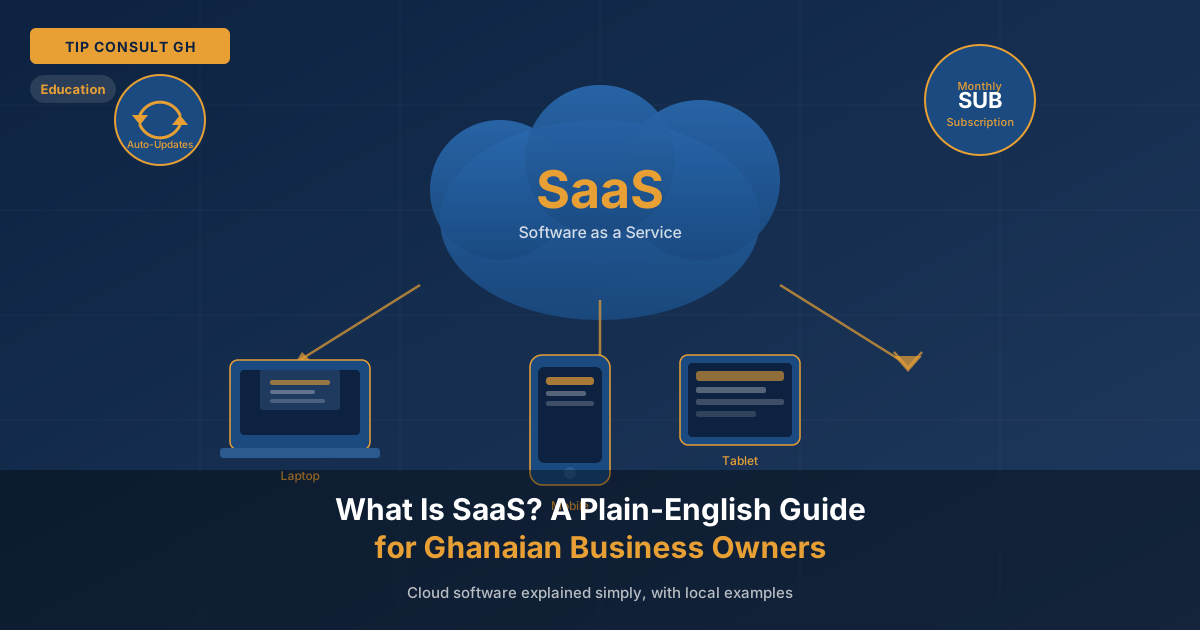
"SaaS" stands for Software as a Service. Three words that are reshaping how businesses around the world — including right here in Ghana — buy, use, and pay for software. If you have ever used Gmail, WhatsApp Business, or an online accounting platform, you have already used SaaS. This guide explains exactly what it means for your business.
The Old Way: Buying Software
Ten years ago, buying software meant buying a physical box — or downloading an installer — and paying a large one-time fee. You installed it on one computer, and it stayed there. Updates cost extra. If your hard drive crashed, you lost everything. If you hired a second employee who needed access, you paid for a second licence.
For most small businesses, this model was expensive, inflexible, and fragile. A power surge, a stolen laptop, or a corrupted drive could wipe out years of data in seconds.
SaaS: The New Model Explained Simply
SaaS software lives on the internet, not on your computer. You pay a monthly or annual fee, log in through a browser or mobile app, and the software works — from any device, from any location, with no installation required.
Think of it like renting a market stall versus building your own shop. Renting means you pay regularly, but you do not worry about the roof, the plumbing, or security — the landlord handles all of that. SaaS is similar: the provider handles the servers, the backups, the security patches, and the software updates. You just use the software.
The Real Benefits for Ghanaian SMEs
- No large upfront cost — instead of paying GHS 15,000 for a software licence, you might pay GHS 200–600 per month. Cash flow stays healthy.
- No IT department needed — the provider maintains servers, applies security patches, and manages infrastructure. You focus on your business.
- Automatic updates — when a new feature is added or a bug is fixed, it happens on the provider's side. You wake up the next morning to an improved system with no action required.
- Access from anywhere — your manager can check the dashboard in Takoradi while you review reports from Accra. Your branch officers in Kumasi see the same live data as head office.
- Scales with you — add more users, more branches, more storage as your business grows. Reduce usage if business slows. You pay for what you use.
- Automatic backups — your data is stored in professional data centres with multiple redundant copies. A power cut at your office does not affect your business records.
Common Misconceptions
"Is my data safe on the cloud?" Your data on a reputable SaaS platform — with proper encryption, access controls, and audit logs — is significantly safer than data on a local computer that can be stolen, flooded, or hit by a power surge. The key is choosing a provider with demonstrable security practices.
"What if the provider closes down?" This is a valid concern. Always confirm before subscribing that you can export your data in a standard format (CSV, PDF, Excel). Reputable providers offer this as standard. Tip Consult GH products all include full data export on request.
"SaaS is just for big companies." The opposite is true. SaaS democratises enterprise-grade software. A two-person trading company in Tema can use the same quality accounting and CRM tools as a multinational — at a fraction of the cost.
Local SaaS Examples You Can Use Today
Tip Consult GH builds SaaS products specifically for the Ghanaian market:
- SchoolPak — SaaS school management for Ghanaian schools, GES-compliant with MoMo fee collection built in
- BigBundles — SaaS data-bundle and reseller platform with MoMo payments and live analytics
When SaaS Is NOT the Right Choice
SaaS is not always the answer. If your business handles highly sensitive data that cannot legally leave Ghanaian borders, you may need an on-premises solution. If your team works in locations with no internet access at all and cannot sync even occasionally, a local-only system may be more practical. And if the available SaaS solutions do not fit your specific industry workflow, a custom-built system may deliver better ROI over time.
Not sure which model fits your situation? Talk to our team — we help businesses make the right technology choice before spending a single cedi.
"SaaS is not a technology trend — it is a business model that puts the right tools in reach of every business, regardless of size." — Tip Consult GH